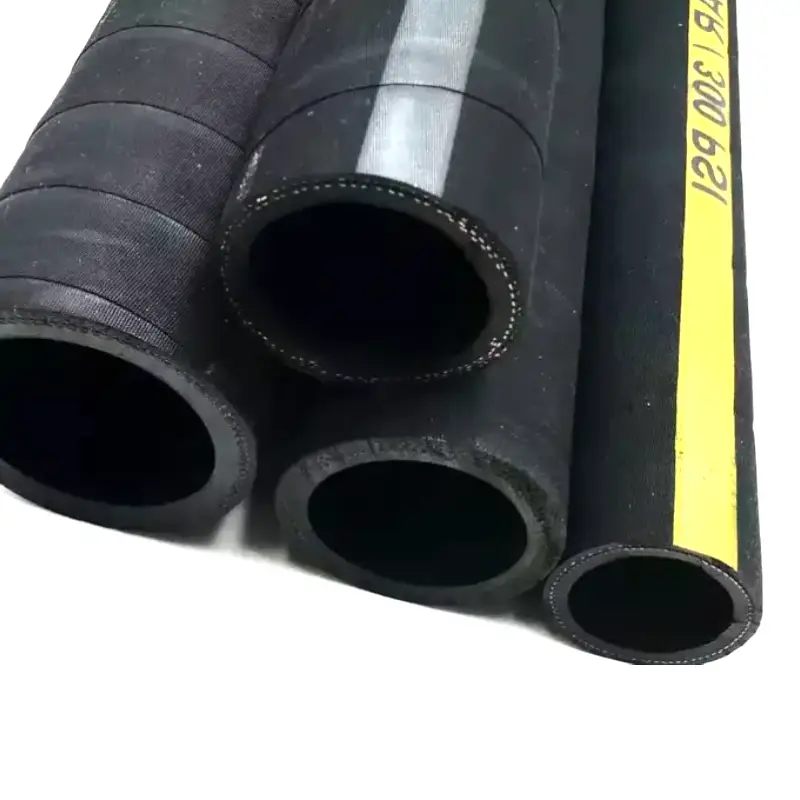
Selecting a hydraulic hose manufacturer requires more than comparing prices. Many companies choose suppliers based on delivery time or quotation alone, but factors such as SAE/DIN compliance, pressure testing, rubber quality, reinforcement structure, and production consistency have a greater influence on long-term performance. A reliable supplier should provide stable products, technical support, and traceable manufacturing processes. A hose failure in a high-pressure system can create downtime costs several times higher than the original hose purchase price.
Hydraulic hose selection mistakes usually start with focusing only on purchase cost. A cheaper hose may reduce the initial budget by 10%–20%, but lower-grade materials, weaker reinforcement layers, or limited inspection processes can shorten service life significantly. In industries such as construction, mining, agriculture, and manufacturing, hydraulic systems often operate for thousands of hours each year, making hose reliability an important factor.
A hydraulic hose is not only a connection component. It carries pressurized fluid under repeated stress, temperature changes, vibration, and mechanical movement.
Many buyers compare only basic specifications such as inner diameter, working pressure, and length. However, two hoses with the same SAE 100R2 or EN 853 rating may perform differently because of differences in tube materials, wire reinforcement quality, bonding technology, and production control. A hose used at 250 bar in a construction machine faces different requirements from a hose operating near 400 bar in industrial equipment.
The first mistake is selecting a supplier without checking manufacturing standards. Hydraulic hose production requires controlled processes from rubber mixing to final pressure testing. International customers usually evaluate suppliers according to standards such as ISO 9001, SAE J517, DIN EN 853, DIN EN 857, and related industry requirements.
A manufacturer with proper quality systems should control raw material batches, extrusion thickness, reinforcement placement, vulcanization temperature, and final inspection results. Some industrial hose applications require impulse testing above 200,000 cycles, while high-pressure applications may require additional burst testing before shipment.
A second mistake is ignoring the manufacturer’s experience with specific applications. Hydraulic hoses used in agricultural equipment, offshore systems, mining machines, and factory automation operate under different conditions.
For example, mining equipment requires strong abrasion resistance because hoses may contact metal structures or rough surfaces. Agricultural machinery often requires resistance against outdoor temperature changes, with operating environments ranging from below 0°C to above 40°C. Industrial automation systems may require smaller bend radii because hoses move repeatedly during operation.
| Application | Common requirement |
|---|---|
| Construction machinery | High pressure resistance, abrasion protection |
| Agriculture equipment | Weather resistance, flexible installation |
| Mining equipment | Heavy-duty reinforcement, impact resistance |
| Industrial automation | Small bend radius, repeated movement |
These differences make supplier engineering ability important when choosing products. A professional custom hydraulic hose manufacturer can provide hose assemblies designed for specific operating conditions instead of only supplying standard products.
The third mistake is selecting a manufacturer that cannot provide enough technical information. Hydraulic hose performance depends on several factors, including working pressure, temperature range, fluid type, installation method, and minimum bend radius.
A common example is incorrect hose routing. A hose installed with excessive bending may fail earlier even if the product itself meets industry standards. According to hydraulic maintenance studies, improper installation contributes to a large percentage of hose-related service problems in industrial equipment.
The correct hose is not only determined by pressure rating. Installation space, movement frequency, and environmental exposure also affect service life.
The fourth mistake is ignoring material quality. Hydraulic hoses normally contain several layers, including an inner tube, reinforcement layer, and outer cover. The inner tube must resist hydraulic fluids, while reinforcement layers provide pressure strength.
Different reinforcement designs influence performance:
-
Single wire braid hoses are suitable for medium-pressure applications.
-
Two-wire braid hoses provide higher pressure capability.
-
Spiral wire hoses are commonly used for heavy-duty equipment requiring repeated pressure cycles.
Rubber compound selection also affects temperature resistance and aging performance. A hose operating continuously at 100°C requires different materials compared with one used in normal ambient conditions. Small differences in compound formulation can influence flexibility, cracking resistance, and operating lifespan.
Another common mistake is failing to check production consistency. Large equipment manufacturers often purchase thousands of hose assemblies annually, so small quality differences between batches can create maintenance issues.
A reliable supplier should maintain production records and inspection data for each batch. Traceability systems help identify manufacturing dates, material sources, and test results. In 2020s industrial manufacturing, many suppliers have adopted digital production management systems to improve consistency and reduce manual inspection errors.
The fifth mistake is choosing suppliers without considering delivery capability. A manufacturer may offer excellent products but lack sufficient production capacity or inventory support.
For international customers, stable supply is important because hydraulic hoses are often replacement parts for machines that cannot remain idle for long periods. A supplier with regional inventory and organized logistics can reduce waiting time from several weeks to only a few days in urgent situations.
A supplier’s ability to deliver consistently matters as much as the quality of the first shipment.
The sixth mistake is overlooking after-sales support. Hydraulic hose problems are sometimes related to operating conditions rather than product defects. A professional supplier should help analyze issues such as leakage, fitting damage, premature wear, or incorrect installation.
Technical support can include hose selection guidance, assembly recommendations, failure inspection, and maintenance suggestions. Companies working with complex hydraulic equipment often benefit from suppliers that provide engineering communication instead of simple product sales.
Another mistake is failing to review customization options. Standard hoses cannot always meet special equipment requirements. Some applications need customized lengths, special fittings, protective sleeves, flame resistance, anti-static properties, or compact designs.
For example, automated production equipment may require hoses that can withstand millions of movement cycles, while offshore systems may require materials resistant to saltwater exposure. A manufacturer with customization capability can adjust product design according to actual operating conditions.
The seventh mistake is ignoring testing procedures. A hydraulic hose manufacturer should perform inspections during multiple production stages instead of relying only on final appearance checks.
Typical testing methods include:
| Testing method | Purpose |
|---|---|
| Pressure test | Verify leakage resistance |
| Burst test | Measure maximum pressure capacity |
| Impulse test | Evaluate repeated pressure cycles |
| Dimensional inspection | Confirm manufacturing accuracy |
Manufacturers investing in advanced testing equipment usually provide more reliable products because defects can be identified before shipment.
The eighth mistake is selecting a supplier without evaluating future technology development. Hydraulic systems are becoming more compact, efficient, and specialized. Equipment manufacturers increasingly require lighter hoses, higher pressure ratings, improved flexibility, and longer service intervals.
Since 2015, many hydraulic component suppliers have invested in automated production lines, improved reinforcement materials, and digital quality systems. These improvements help manufacturers meet the requirements of modern machinery used in energy, transportation, agriculture, and industrial production.
Supplier evaluation should therefore include several areas:
| Evaluation factor | Questions to ask |
|---|---|
| Quality control | Are products tested according to international standards? |
| Engineering support | Can the supplier recommend suitable hose designs? |
| Production capacity | Can large orders be delivered consistently? |
| Customization | Can special applications be supported? |
| Service | Is technical assistance available after purchase? |
Choosing a hydraulic hose manufacturer based only on price can create additional costs through replacement, downtime, and maintenance. A supplier with strong manufacturing control, application knowledge, testing capability, and customer support can provide more stable performance over the full service period.
The best supplier is the one that can consistently provide suitable hydraulic hose solutions for real operating conditions, not simply the lowest quotation.