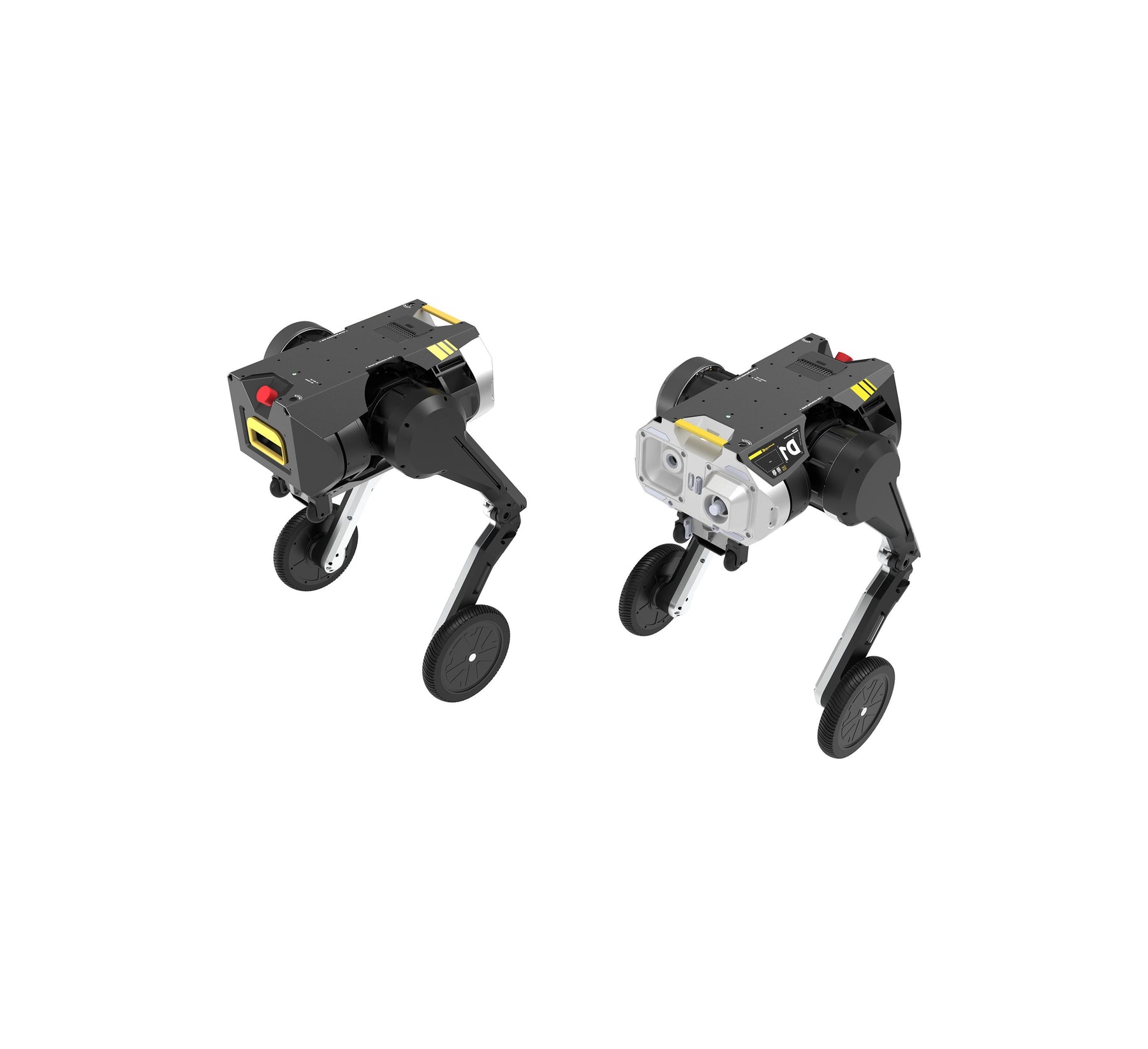
A suitable embodied robot platform should be selected by matching application goals, hardware capability, software openness, and long-term support. Buyers should compare factors such as payload, sensor package, computing power, SDK access, maintenance service, and total ownership cost. A 2025 industry survey of robotics developers showed that more than 60% considered software flexibility and integration support as important as hardware specifications when choosing a platform.
Embodied robot platforms combine mechanical systems, sensors, computing units, control software, and AI models into one system. Before placing an order, companies should define the exact tasks, working environment, and expected operating period. A research platform for AI development and a commercial robot for warehouse operations may have completely different requirements.
A robot designed for laboratory testing may only run a few hours per day, while a commercial deployment may require operation for 8–16 hours daily. The first evaluation should focus on what the robot needs to accomplish instead of selecting a platform based only on appearance, size, or demonstration videos.
“A platform that performs well in a controlled environment may require additional hardware and software improvements before handling real-world conditions.”
The application environment affects nearly every hardware choice. Indoor logistics robots usually prioritize navigation accuracy and battery endurance, while mobile manipulation platforms require stronger joints, better perception, and higher computing capacity. According to robotics deployment reports from 2024, more than 70% of commercial robot projects involved some level of customization after the initial platform purchase.
| Application | Important Requirements |
|---|---|
| Warehouse transport | Navigation accuracy, battery life, fleet management |
| Industrial inspection | Sensor quality, communication stability, long operation time |
| Research development | Open SDK, ROS support, data access |
| Human interaction | Safety systems, speech, perception capability |
The mobility structure should be reviewed before ordering because different robot designs provide different performance levels. Wheeled robots generally consume less energy on flat surfaces, while legged robots provide better movement on uneven terrain.
A wheeled platform may achieve 8–12 hours of operation with a single battery cycle, while legged robots often require more energy because multiple actuators continuously adjust balance. A quadruped robot with 12–20 actuated joints needs accurate motor control, real-time feedback, and strong computing resources.
A buyer following a modular robot buying guide should compare:
-
Number of degrees of freedom
-
Joint torque capacity
-
Maximum payload
-
Movement speed
-
Terrain capability
-
Battery replacement options
The mechanical structure also determines future expansion possibilities. A platform that allows additional arms, sensors, or end-effectors can support more applications over several years.
Sensor configuration should be reviewed with the same attention as mechanical specifications. Modern embodied robots rely on multiple sensing systems to understand surroundings and perform tasks.
Common sensor packages include:
| Sensor Type | Typical Function |
|---|---|
| RGB camera | Visual recognition and object detection |
| Depth camera | Distance measurement and 3D perception |
| LiDAR | Mapping and navigation |
| IMU | Motion estimation |
| Force sensor | Contact control |
A platform with more sensors is not automatically better. Sensor accuracy, data frequency, calibration methods, and software access determine how useful the information will be. Some robots provide only processed results, while research-oriented platforms may allow access to raw sensor streams.
For AI development, raw data access can reduce development limitations. A vision model may require thousands or millions of image samples, and developers often need direct control over data collection and processing pipelines.
Computing hardware should be checked before ordering because embodied intelligence requires significant processing capability. Robot systems may need to run simultaneous workloads, including object recognition, mapping, motion planning, and AI inference.
Important specifications include:
| Component | Questions |
|---|---|
| CPU | Is processing speed sufficient for real-time control? |
| GPU | Can AI models run locally? |
| RAM | Is enough memory available for large applications? |
| Storage | Can datasets and software models be stored? |
| Communication | Are Ethernet, Wi-Fi, or industrial protocols supported? |
Since 2020, many robotics platforms have increased onboard computing capability because AI-based perception models require more resources. In some applications, inference speed below 30–50 milliseconds is necessary for stable interaction between perception and motion control.
Software support often determines how quickly a robot platform can be adapted. Hardware provides physical capability, but software determines whether developers can create new applications.
Before purchase, buyers should ask:
-
Does the platform support ROS or ROS 2?
-
Are APIs publicly documented?
-
Is simulation software available?
-
Can developers access robot data?
-
Are programming examples provided?
A closed software system may work for fixed tasks, but it can limit future development. Open platforms usually allow researchers and engineers to test new algorithms, integrate third-party tools, and adjust control methods.
For example, a robot used in academic research may require access to navigation algorithms, sensor data, and machine learning frameworks. A commercial service robot may focus more on stable operation and simple management interfaces.
Customization capability should also be evaluated because many deployments require changes after initial testing. A robot ordered for one application may later need additional sensors, different grippers, or modified software.
Typical customization areas include:
| Area | Possible Changes |
|---|---|
| Mechanical | Arms, wheels, grippers, mounting structures |
| Electrical | Power modules, communication interfaces |
| Software | Navigation, AI models, control programs |
| Data | Collection tools and training workflows |
A 2023 robotics market analysis found that approximately 50% of enterprise robot deployments involved additional integration work after delivery. Platforms with modular designs usually reduce the time required for modifications.
The supplier’s technical support should be considered before purchase. Robot systems contain mechanical, electrical, and software components, so maintenance requirements continue after installation.
Buyers should review:
-
Warranty period
-
Spare parts availability
-
Software update frequency
-
Training resources
-
Remote support options
For production environments, repair speed affects availability. A robot used in daily operations may require replacement parts within days rather than weeks. Support quality should be evaluated through documentation, customer references, and update history.
Total ownership cost should include more than the initial purchase price. A robot platform may require additional spending on integration, accessories, software services, and maintenance.
| Cost Category | Examples |
|---|---|
| Hardware | Robot body, sensors, batteries |
| Software | Licenses, cloud services, development tools |
| Integration | Engineering and application development |
| Maintenance | Parts replacement and technical support |
| Training | Operator and developer education |
A platform priced at $40,000–$60,000 may require additional integration costs depending on application complexity. Companies should estimate costs over 3–5 years instead of comparing only the initial quotation.
Testing data should be requested before signing an order. Product demonstrations show capability, but performance records provide more useful information.
Recommended testing information includes:
-
Navigation success rate
-
Battery performance under workload
-
Payload testing results
-
Sensor accuracy
-
Long-duration operation data
-
Software update records
For example, a robot completing a task 95% of the time in a short demonstration may perform differently after thousands of repeated operations. Long-term reliability data helps buyers understand expected performance.
“A successful robot platform should support both the first deployment and future application changes.”
Scalability should be reviewed when the goal is commercial use. A single prototype may not require fleet management, remote monitoring, or automated software updates, but larger deployments usually need these functions.
Platforms expected to support multiple units should provide:
-
Fleet management tools
-
Remote diagnostics
-
Data management
-
User permission control
-
Software update systems
A robot platform selected in 2026 may remain in service for several years, so upgrade capability affects long-term usability. Buyers should consider whether the platform can accept new sensors, improved AI models, or additional accessories without replacing the entire system.
Before ordering an embodied robot platform, buyers should compare application requirements, mechanical design, sensing capability, computing resources, software openness, customization options, supplier support, and long-term costs. A structured evaluation process helps organizations select a platform that fits current tasks while leaving room for future development.
More information about modular robot configurations and platform options can be found in this modular robot buying guide.